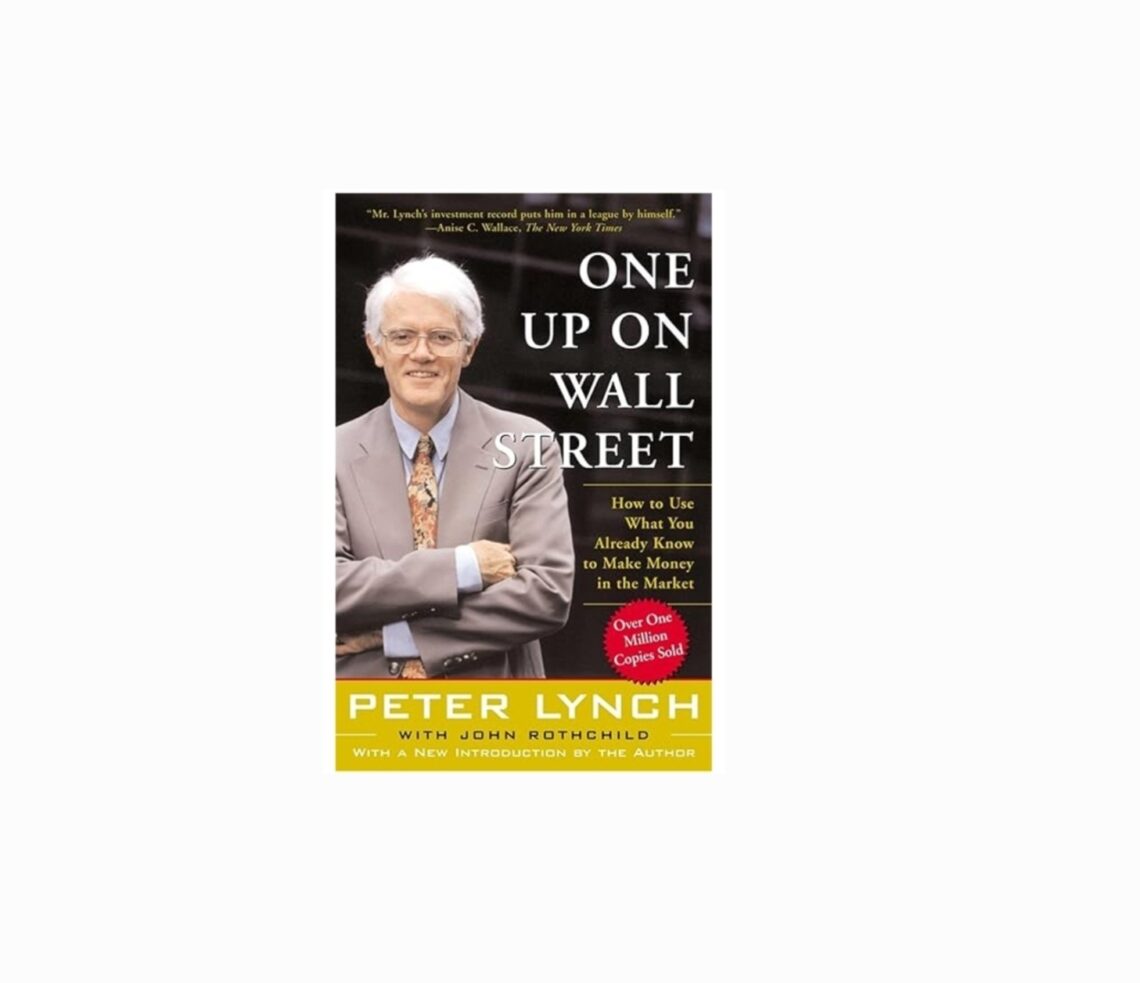
What if the advantage most people are chasing in markets—better information, faster reactions, smarter forecasts—is the wrong one entirely?
That quiet provocation sits beneath One Up On Wall Street(Peter Lynch with John Rothchild), even decades after it was first written. The book is often remembered for its practicality, but its deeper value lies elsewhere: it reframes where insight actually comes from, and what kind of thinking is required to build wealth without surrendering your life to markets.
A book as context, not instruction
Peter Lynch wrote in a world without smartphones, social feeds, or real-time price alerts. Yet the idea that endures is not dated at all. He suggests—without saying it explicitly—that professional distance is not always an advantage. Sometimes, proximity matters more.
This is not an argument against analysis. It is an argument against outsourcing judgement entirely. The book assumes that ordinary life, if observed carefully, already contains signals about how the world is changing. The mistake is believing those signals only become “real” once they appear on a screen.
The core tension: familiarity versus false certainty
Modern investing culture pushes certainty. Models, targets, consensus views. But certainty often arrives after the opportunity has been diluted.
The mental model here is subtler: familiarity, when combined with restraint, can reduce behavioural risk. When you understand a product, a service, or a business because you interact with it repeatedly, you are less likely to panic at noise. Familiarity anchors patience.
This matters in a FIRE context. Financial independence is not achieved by brilliant timing; it is achieved by staying invested long enough for compounding to work. Anything that helps you remain calm and consistent is not a soft advantage—it is structural.
Translating the idea into real decisions
Seen through a life-design lens, this idea extends beyond stock picking. It changes how you think about side hustles, career moves, and even consumption.
People often underestimate the informational value of their own routines. The tools they rely on, the services they repeatedly pay for, the inefficiencies they notice but tolerate. These observations do not guarantee profit, but they sharpen judgement. They help you distinguish between temporary excitement and durable usefulness.
In investing, this reduces the urge to chase unfamiliar narratives. In work, it encourages building on existing competence rather than perpetual reinvention. In side projects, it nudges you towards solving problems you actually understand.
Control, not prediction
There is an implicit philosophy running through this book: you do not need to predict the future to position yourself well within it.
This aligns closely with FIRE thinking. Control comes from lowering dependence on constant correctness. You choose structures—financial, professional, personal—that function even when forecasts fail. Long-term investing, simple systems, and understandable opportunities all serve the same goal: reducing fragility.
Risk, in this view, is not volatility. Risk is being forced to act at the wrong time. Familiarity, patience, and a margin of safety all reduce that risk by expanding your options.
How this changes perspective
Read this way, One Up On Wall Street is not a call to beat professionals at their own game. It is a reminder that freedom is often built by refusing unnecessary complexity.
The insight is quietly liberating. You do not need to monitor everything. You do not need an opinion on every market move. You need fewer decisions, made with more clarity, over longer periods of time.
This idea connects closely with broader reflections on financial independence and time—how reducing cognitive load can be as powerful as increasing income.
A question worth carrying forward
If familiarity, patience, and restraint matter more than constant optimisation, then the real question becomes:
Where in your own life are you already close enough to see what others overlook—and disciplined enough to wait?
That question does not end with investing. It follows you into how you work, what you build, and how deliberately you design your freedom.
Disclaimer: This article is for general information only and is not financial advice. You are responsible for your own financial decisions.

