The Hardest Part of Investing Is Not Intelligence. It’s Restraint.
Why do the same mistakes keep repeating in markets, even when the information is widely available and the warnings are well known?
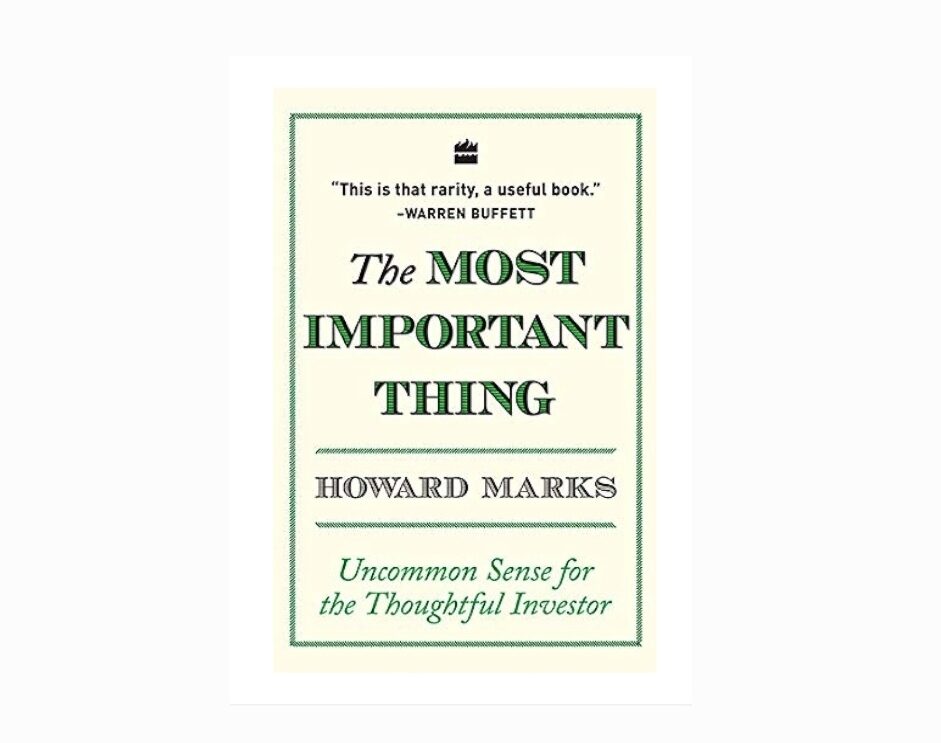
That question sits at the centre of The Most Important Thing by Howard Marks.
Not as a critique of technique, but as an examination of human behaviour under uncertainty.
This book is built from decades of Marks’ investment memos—written not to impress, but to think clearly. While it spans many chapters, the throughline is consistent: investing is difficult not because it is complex, but because it is psychologically demanding.
The book as context, not instruction
Marks does not offer formulas or shortcuts. He assumes the reader already knows the basics. What he questions is whether knowing is the same as acting well.
The book treats markets as environments shaped by emotion as much as data. Prices, in this view, are not neutral reflections of value. They are the outcome of desire, fear, comparison, and the persistent hope that uncertainty can somehow be eliminated.
This is not a call to outsmart the market. It is a call to avoid being swept up by it.
The core tension: value versus behaviour
At the heart of the book is a simple but uncomfortable idea:
most investment errors are behavioural, not analytical.
The recurring forces are familiar:
• the desire for more
• the fear of missing out
• the habit of comparison
• the pull of the crowd
• the longing for certainty in an uncertain world
These forces are always present. Combined, they exert enormous pressure on prices and decision-making. The result is not occasional error, but systematic, repeated mistakes—made widely, and often with confidence.
Marks’ focus on value is inseparable from this behavioural lens. Value only matters if you are willing to act differently from the crowd, and patient enough to wait while being uncomfortable.
Risk is not volatility. It is ignorance and complacency.
One of the book’s most important reframings is its treatment of risk. Risk is not defined by day-to-day price movement. It is defined by not knowing what you are exposed to, or believing that adverse outcomes no longer apply.
This matters deeply for long-term investors and anyone pursuing FIRE. Financial independence does not require constant action. It requires avoiding irreversible mistakes. Overconfidence, leverage, and blind faith in favourable conditions are far more dangerous than temporary drawdowns.
In this framework, risk management is not defensive. It is strategic. It preserves the ability to stay in the game long enough for patience to be rewarded.
Patience as a form of control
Marks repeatedly returns to patience—not as passivity, but as discipline.
Opportunities are cyclical. Excess and scarcity alternate. The hardest skill is not identifying value in hindsight, but waiting when nothing looks compelling, and acting when fear makes doing so uncomfortable.
For side hustles, careers, and investment portfolios alike, this perspective changes how time is used. Progress is not linear. There are periods when restraint creates more value than activity.
Control, in this sense, comes not from prediction, but from positioning—having the financial and psychological capacity to wait.
Reframing certainty and time
Modern finance often promises clarity: forecasts, targets, scenarios. Marks offers something quieter: acceptance.
Uncertainty is permanent. Markets will overshoot and undershoot. Crowds will alternate between greed and caution. The investor’s role is not to eliminate these cycles, but to recognise where they are within them—and to act with humility.
This way of thinking aligns closely with FIRE as optionality rather than a fixed retirement date. The goal is not optimisation, but durability: preserving capital, flexibility, and decision-making freedom over long periods of time. This broader idea is explored further in a reflection on financial independence as optionality rather than an endpoint.
An open question to carry forward
If the greatest threats to investment outcomes are universal human tendencies—desire, fear, comparison, and the search for certainty—then the challenge is not learning more rules.
It is learning when not to act.
In a world that rewards speed and confidence, the most important thing may simply be this:
can you remain patient, sceptical, and self-aware when the market makes that hardest to do?
That question extends beyond investing. It shapes how time, risk, and freedom are approached in every long-term decision.
Disclaimer: This article is for general information only and is not financial advice. You are responsible for your own financial decisions.

