The simple path isn’t about money. It’s about control.
What if the real problem with money isn’t that it’s complicated—but that we keep mistaking certainty for control?
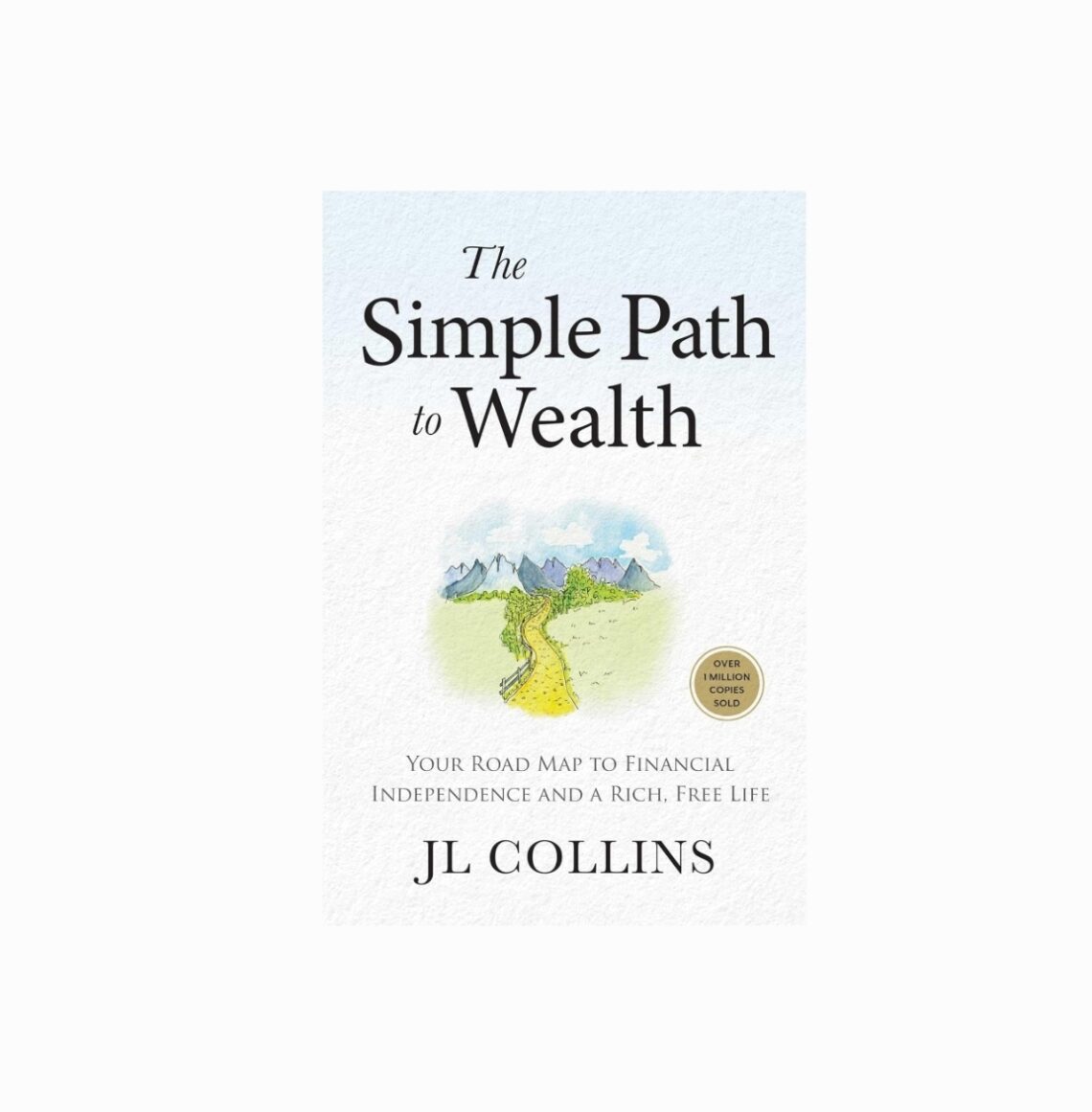
That question sits quietly beneath The Simple Path to Wealth(JL Collins), even though the book itself rarely asks it outright. The ideas are plain, almost stubbornly so. But when viewed through a FIRE and life-design lens, they point to something deeper than investing mechanics: a reframing of how freedom is built in an uncertain world.
A book as context, not a destination
This book often enters conversations about financial independence because of its simplicity. Index funds. Long horizons. Ignore noise. Reduce friction. None of this is radical on its own. What matters is not the advice, but the assumption beneath it: that most financial stress comes from trying to predict what cannot be predicted.
Rather than offering certainty, the book quietly argues for something more durable—resilience through structure.
The tension: control versus certainty
Modern life trains us to chase certainty. Forecasts, projections, five-year plans, perfectly optimised portfolios. But certainty is fragile. Markets change. Jobs disappear. Health shifts. Life interrupts.
The core insight here is not “invest simply.” It’s this: design your financial life so that uncertainty matters less.
Simplicity, in this sense, is not minimalism for its own sake. It’s a way of reducing decision-points, emotional triggers, and dependency on constant correctness. When fewer things must go right for your plan to work, you gain something far more valuable than precision—you gain room to breathe.
What this changes in real decisions
Viewed this way, the book stops being about portfolios and starts being about optionality.
A simple, low-maintenance investment approach does three quiet but powerful things:
• It lowers the cognitive load of money decisions.
• It reduces the temptation to react to short-term signals.
• It frees attention for work that actually compounds—skills, relationships, health, side projects.
For those pursuing FIRE, this matters more than optimisation. Financial independence is not a finish line; it’s a shift in leverage. When your financial system runs without constant intervention, you reclaim time and mental bandwidth. That bandwidth is what allows experimentation—changing careers, scaling back work, or building income streams that align better with how you want to live.
Risk as something to live with, not eliminate
There’s an implicit honesty in this philosophy: risk never disappears. It only changes shape.
Trying to outsmart markets concentrates risk in decision-making. Building a robust, boring system spreads risk over time. One relies on being right repeatedly. The other relies on staying solvent, patient, and emotionally intact.
This distinction is critical for anyone designing a life beyond full-time work. FIRE is not about escaping risk; it’s about choosing which risks are worth carrying. Volatility is tolerable. Burnout is not. Market swings can be waited out. A career built on constant pressure often cannot.
Freedom as a by-product, not a goal
What emerges from this lens is a quieter definition of freedom. Not the freedom of excess, but the freedom of non-fragility.
When money is structured simply, work becomes optional sooner—not because wealth explodes, but because dependency shrinks. Expenses stabilise. Expectations soften. Time horizons lengthen. The system does the heavy lifting so the person doesn’t have to.
This is where the book intersects with life design. Financial independence becomes less about retiring early and more about owning your pace. Choosing when to push and when to pause. Deciding how much complexity you’re willing to tolerate in exchange for how much control.
An open question to sit with
If the simplest path works not because it’s optimal, but because it’s forgiving, then the real question isn’t how much risk you can take.
It’s this:
How much complexity does your life actually need to function well—and how much is quietly stealing your freedom?
That question lingers long after the investing details fade. And perhaps that’s the point.

