What would change if you stopped treating “financial freedom” as a vague destination—and started treating it as a date on the calendar you’re willing to organise your life around?
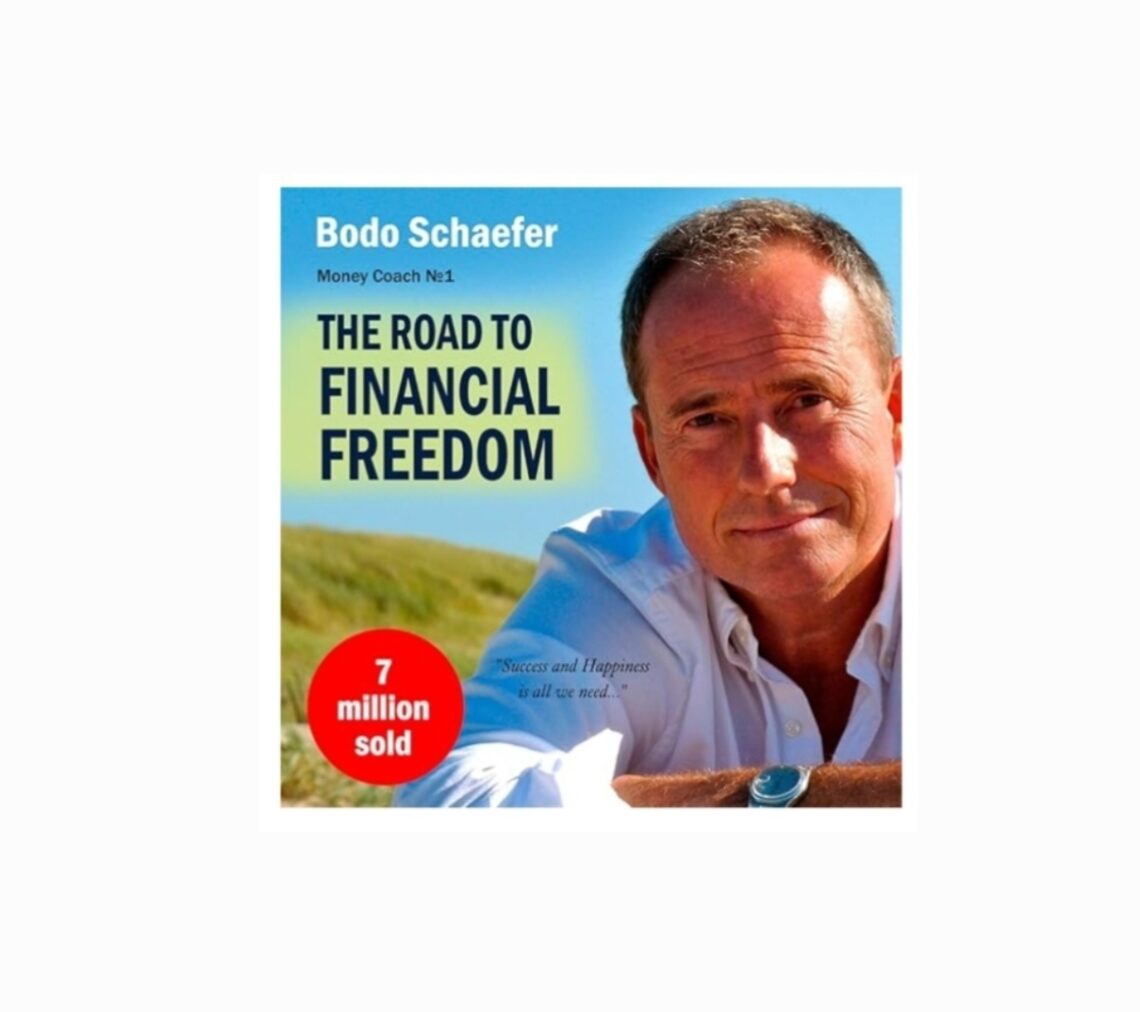
That question sits behind Bodo Schäfer’s The Road to Financial Freedom. The book is often associated with a bold timeline (“a first million in seven years”), but the more interesting idea is not the number. It’s the frame: a finite horizon that forces clarity, trade-offs, and a different relationship with work.
The book as context, not a promise
You don’t need to believe in any particular milestone to benefit from the underlying mental model. In a world where money advice is either endlessly technical or endlessly motivational, a time-bound target does something quietly practical: it turns “someday” into structure.
The point isn’t to predict the future. The point is to behave differently in the present.
The core insight: time limits create honest priorities
An open-ended goal invites soft thinking. A seven-year horizon is not long enough to rely on miracles, but long enough for compounding and skill-building to matter. It creates a productive tension: urgency without panic.
This matters for modern life because our default setting is drift. We earn, spend, occasionally invest, and hope it adds up. A defined horizon interrupts that drift. It makes you ask questions that are uncomfortable—but useful:
Are my expenses supporting a life I actually want, or a life I’m trying to justify?
Is my career building leverage, or merely paying rent on my time?
Am I investing consistently, or only when I feel confident?
A time limit doesn’t guarantee success. But it does remove the illusion that you can get the outcome without the cost.
Control versus certainty: designing a system that survives your moods
Most people don’t fail financially because they lack intelligence. They fail because they overestimate how stable their future selves will be.
The seven-year frame shifts the focus from “being right” to “staying consistent”. It pushes you towards systems that don’t require daily willpower: automated investing, reduced lifestyle inflation, and work choices that increase future optionality.
This is where FIRE and life design intersect. Financial independence is not just an investment problem; it’s an attention problem. The more your plan depends on constant decision-making—timing the market, chasing new strategies, reacting to headlines—the more fragile it becomes.
A structured horizon invites a simpler question: what system can you follow even when you’re tired, busy, or doubtful?
Long-term thinking without romanticising “the long term”
Seven years is a useful middle distance. It’s long enough to respect compounding, and short enough to force you to confront trade-offs now.
For investing, it nudges you away from short-term performance anxiety and towards accumulation behaviour: contributing steadily, minimising friction, and letting time do the heavy lifting.
For work and side hustles, it changes the evaluation metric. Instead of asking whether a project feels exciting this month, you ask whether it builds durable assets over seven years—skills, reputation, distribution, ownership. The same effort can either create income that resets to zero each week, or income that accumulates quietly in the background.
The book’s deeper prompt is this: build a life where your future becomes less dependent on your next pay cycle.
Risk, optionality, and human behaviour
A time-bound plan also reframes risk. Not as volatility, but as dependency.
The riskiest position is not owning a volatile asset; it’s having no choices. No cash buffer, no market exposure, no alternative income streams, no ability to say no. Optionality is the real hedge.
Seen this way, the “seven years” idea is less about getting rich and more about buying back options: the option to change jobs, reduce hours, move cities, take a break, start something small, or endure a bad season without collapsing.
This perspective aligns with a broader reflection on FIRE as optionality rather than a retirement date, explored further here: FIRE-CALCULATOR
A quieter perspective shift
Read through a FIRE lens, the book’s most useful effect is psychological. It asks you to treat money as something you design around—rather than something you simply endure.
A finite horizon sharpens your attention. It exposes leaks that “future me will handle it” used to hide. It makes your spending more honest, your investing more consistent, and your work decisions more intentional.
And perhaps the most important shift is this: financial freedom stops feeling like a mood, and starts feeling like a practice.
A question to leave open
If a seven-year horizon is valuable not because it predicts what will happen, but because it changes how you behave—then the real question is not whether the timeline is realistic.
It’s this:
What would you stop doing—today—if you truly believed your future freedom depended on your next seven years of choices?

