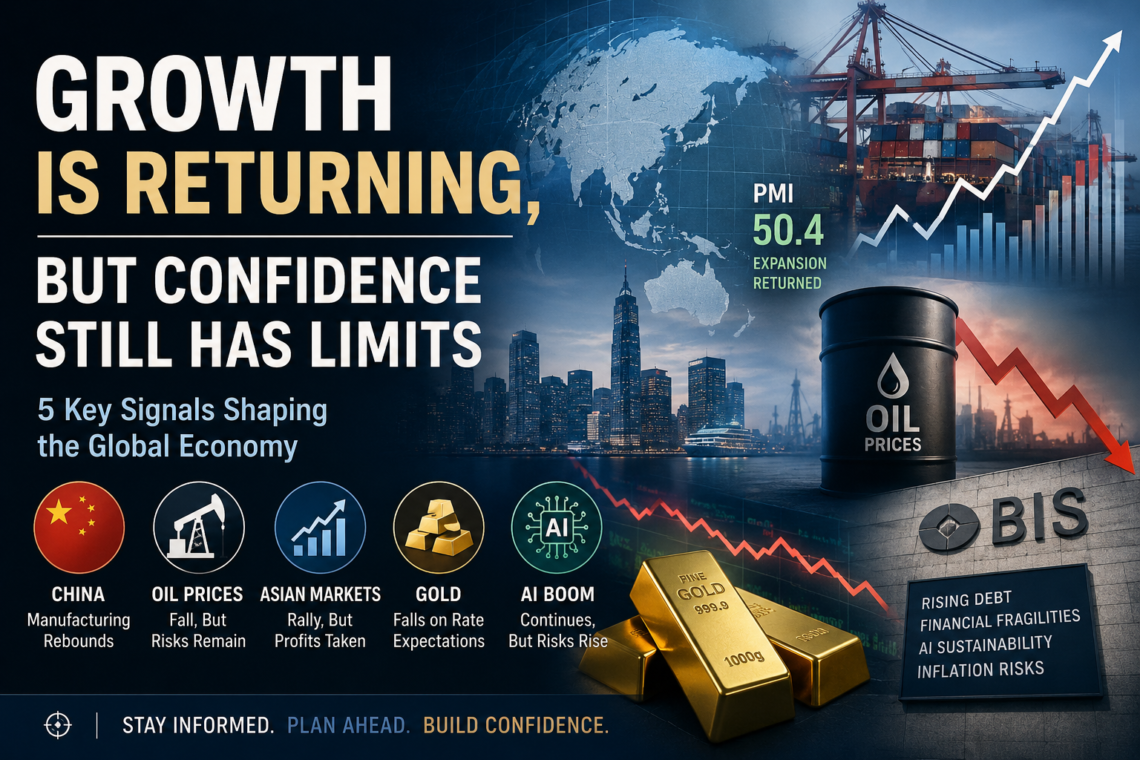
✔️ China’s Factories Are Expanding, but the Recovery Remains Uneven
What’s Happening
China’s factory activity returned to expansion in June, helped by demand for AI-related exports such as chips and computers. The official manufacturing PMI rose above the expansion threshold, while weak domestic demand and the property downturn continued to weigh on the broader economy.
Why This Matters
China remains central to global manufacturing, commodities, and supply chains. A recovery led mainly by high-tech exports may support industrial activity, but it does not necessarily signal broad domestic strength.
What Elevates It
The recovery appears concentrated in AI-linked export sectors. Factory-gate prices and employment indicators still point to pressure beneath the headline improvement.
✔️ Oil Prices Have Fallen, but Inflation Risks Have Not Disappeared
What’s Happening
Oil prices retreated quickly after recent energy-market pressure, reducing immediate urgency for the European Central Bank to act again. Reuters reported that ECB policymakers still see a later rate increase as possible, depending on inflation data.
Why This Matters
Lower oil prices reduce near-term inflation pressure, especially through transport and production costs. But central banks remain cautious because energy markets can shift quickly.
What Elevates It
The oil retreat changes the timing pressure, not the policy problem. Inflation remains above target, and energy shocks remain part of the rate-setting discussion.
✔️ Asian Markets Are Rallying, but Investors Are Taking Profits
What’s Happening
Asian equities headed for a record-breaking quarter, led by Japan, South Korea, and Taiwan. Reuters reported that semiconductor stocks helped drive the rally, while some institutional investors were rebalancing and taking profits rather than adding fresh capital.
Why This Matters
The rally shows how closely regional markets are tied to technology and semiconductor demand. It also highlights the concentration of market leadership around AI-linked sectors.
What Elevates It
Momentum remains high, but positioning is becoming more selective. Strong index performance does not always mean broad investor conviction is increasing.
✔️ Gold Is Falling, but Rate Expectations Are Still Driving Markets
What’s Happening
Gold moved towards its largest monthly decline since 2008 as higher U.S. rate expectations and a firm dollar reduced demand for the metal. Reuters reported that traders are watching upcoming U.S. employment data and Fed-rate expectations closely.
Why This Matters
Gold often benefits from uncertainty, but higher real rates and a stronger dollar can make it less attractive. This shows how rate expectations continue to dominate cross-asset pricing.
What Elevates It
Middle East tensions have not been enough to support gold. Monetary policy expectations are currently outweighing traditional safe-haven demand.
✔️ The AI Boom Continues, but Financial Fragility Is Back in Focus
What’s Happening
The Bank for International Settlements warned that rising public debt, financial fragilities, and the sustainability of the AI boom are increasing global risks. Its annual report pointed to fiscal strain, lingering supply shocks, and the risk of stubborn inflation.
Why This Matters
AI remains a major growth theme, but markets are starting to examine the cost, funding, and durability of that expansion. Large investment cycles can support growth, but they also create pressure if expected returns take longer to appear.
What Elevates It
The warning came from the BIS, the central-bank umbrella group. That places AI investment, debt levels, and financial stability in the same policy conversation.
📌 What This Means for Financial Planning
This week’s developments show how quickly the baseline can shift.
China’s manufacturing data improved, but the recovery remains narrow. Oil prices fell, but inflation risks have not disappeared. Asian markets rallied, but gains remain concentrated around technology and semiconductors. Gold weakened even with geopolitical tension, showing how rate expectations can outweigh traditional safe-haven behaviour. AI remains a powerful market theme, but policymakers are now linking it to debt and financial stability.
For financial planning, the lesson is not to predict which signal wins. It is to recognise that long-term assumptions can change from several directions at once: growth, inflation, interest rates, currencies, commodities, and market concentration.
A plan built around one clean baseline may look stable on paper. In reality, the pressure often comes from variables moving together.
📌 Related Calcufinder Tool
Scenario Return Calculator -This week’s news highlights how growth, inflation, rate expectations, and market concentration can change long-term return assumptions.
📌 Further Reading
Scenario Return Calculator: Why Stable Markets Still Require Scenario-Based Planning
📌 Representative Sources
Reuters — https://www.reuters.com/world/asia-pacific/chinas-factory-activity-expands-june-high-tech-exports-2026-06-30/
Reuters — https://www.reuters.com/business/energy/surprisingly-quick-oil-price-retreat-eases-urgency-ecb-act-sources-say-2026-06-30/
Reuters — https://www.reuters.com/world/china/global-markets-global-markets-2026-06-30/
Reuters — https://www.reuters.com/business/gold-set-fourth-monthly-fall-bets-fed-rate-hikes-2026-06-30/
Reuters — https://www.reuters.com/business/finance/global-markets-bis-pix-2026-06-28/
Disclaimer: This article is for general information only and is not financial advice. You are responsible for your own financial decisions.

