“Money is never just money. It’s the mirror that reflects who you truly are.”
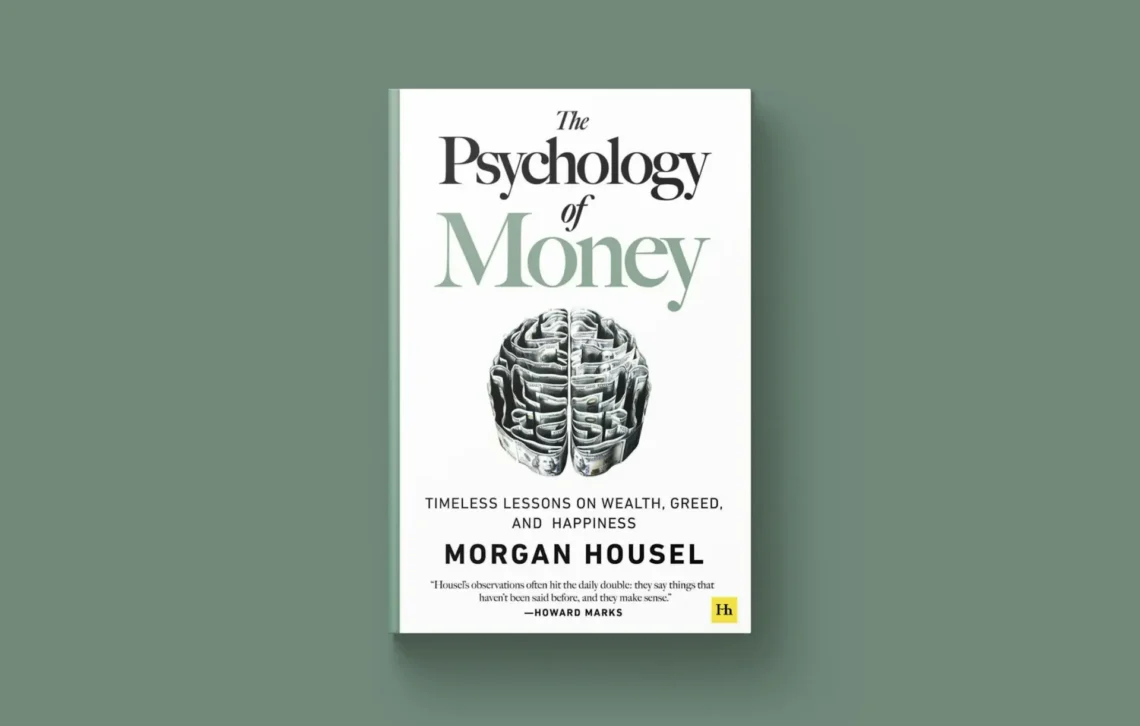
Money decisions look rational on the surface, but they’re powered by emotion, fear, ego, and old memories we barely recognise. The Psychology of Money doesn’t lecture—you feel like someone finally explained why you behave the way you do with money. It’s sharp, honest, and deeply human. This book won’t tell you how to get rich. It tells you how to stay sane, build freedom, and understand yourself in the process.
1. Money is Not Math — It’s Psychology
Money never moves alone; it drags your emotions with it.Every spending decision whispers a hidden feeling—fear, pride, insecurity, or relief. This book cuts through the noise and shows you the emotional engine behind your choices. Before learning “how to get rich,” you learn “why you spend the way you do.” Your past, your upbringing, and your fears quietly sculpt your financial habits. Understand your mind, and your money finally stops running away from you. With clarity comes calm, and with calm comes control. The book shows that emotional awareness is a financial strategy, not a soft skill. When your inner world becomes stable, your outer world follows. Reading your money is just another way of reading yourself.
2. True Wealth Is Defined by You, Not the World
Freedom—not luxury—is the real finish line.The book reminds you that independence is “the grandmother of all financial goals.” It’s not about outrunning other people; it’s about outrunning your own constraints. The author’s father walked away from a high-status ER career to reclaim his life. That choice wasn’t about money—it was about alignment. Wealth becomes meaningful only when it matches the life you actually want. Your values, not society’s scoreboard, determine your financial destination. Once your personal definition of “enough” becomes clear, the noise fades. You stop drifting and start directing. This book teaches you to build wealth at your pace, on your terms.
3. Self-Understanding Is the Shortcut to Financial Peace
Financial advice fails when it forgets that people are complicated.There is no universal formula—only what fits your life and your emotional landscape. This book pushes you to understand your triggers, your cycles, your patterns. When you know why you spend, saving becomes instinctive rather than forced. Lifestyle expectations are the silent enemy; they rise fast and rarely fall. Learning to control them is more powerful than chasing a higher income. The moment you understand your inner drivers, uncertainty loses its teeth. Money becomes less about pressure and more about clarity. The book hands you a mirror first, and only then a map. People who know themselves don’t crumble in front of money—they guide it.
4. A Wealth Mindset Is Built, Not Born
Wealth begins with humility—especially when life is going well.It also grows with compassion—especially when life goes wrong. The book insists that ego is expensive, but restraint is profitable. “Less ego, more wealth” isn’t a slogan; it’s a discipline. Real wealth hides in what you don’t buy today. The strongest financial foundation is emotional self-governance. You don’t need brilliance—you need consistency. The right mindset doesn’t just change how you save; it changes who you become. Invisible wealth, built quietly, outlasts every flashy purchase. This book trains your thinking long before it trains your wallet.
5. Escaping the Trap of Impressing Others
The valet story exposes a brutally honest truth:People admire the car, not the person driving it. You spend to signal worth, but no one is really watching. This realisation kills the need to perform your wealth. When applause disappears, authenticity becomes possible. You stop buying things for imagined audiences that don’t exist. The book frees you from the exhausting cycle of signaling and comparison. It redirects your energy back to what matters: peace, stability, and self-respect. True wealth grows outside the spotlight, not inside it. You finally learn to live, not to prove.
6. Money Is the Tool That Buys Back Control
Psychologists call it reactance—humans collapse when control is taken away.Even work you love feels suffocating if you lose choice over it. This book reframes money as a tool for reclaiming agency. Not luxury—control. Control over your time, your schedule, your emotional bandwidth. You gain this not by earning more, but by wanting less. A stable lifestyle below your income buys freedom faster than any promotion. Once control returns, life feels lighter, truer, yours again. Money becomes a quiet protector, not a loud master. You realise you were trying to buy “stuff,” when what you really needed was autonomy.
Why I Recommend This Book
This book didn’t just reshape the way I think about money—it reshaped the way I think about myself. It helped me name what I truly want, not what I’m conditioned to chase. Suddenly my financial goals stopped being vague wishes and became clear, directional steps. It taught me that wealth is not about excess—it’s about independence. And that’s why Charlie Munger’s line hits so hard: “I did not intend to get rich. I just wanted to get independent.” This book shows you how to build that exact kind of freedom. It dissolves comparison, sharpens priorities, and calms the noise around you. It aligns money with your values, instead of forcing your values around money. You finish the book with a new kind of clarity—quiet, powerful, grounded. You don’t just understand money better; you understand yourself better.

