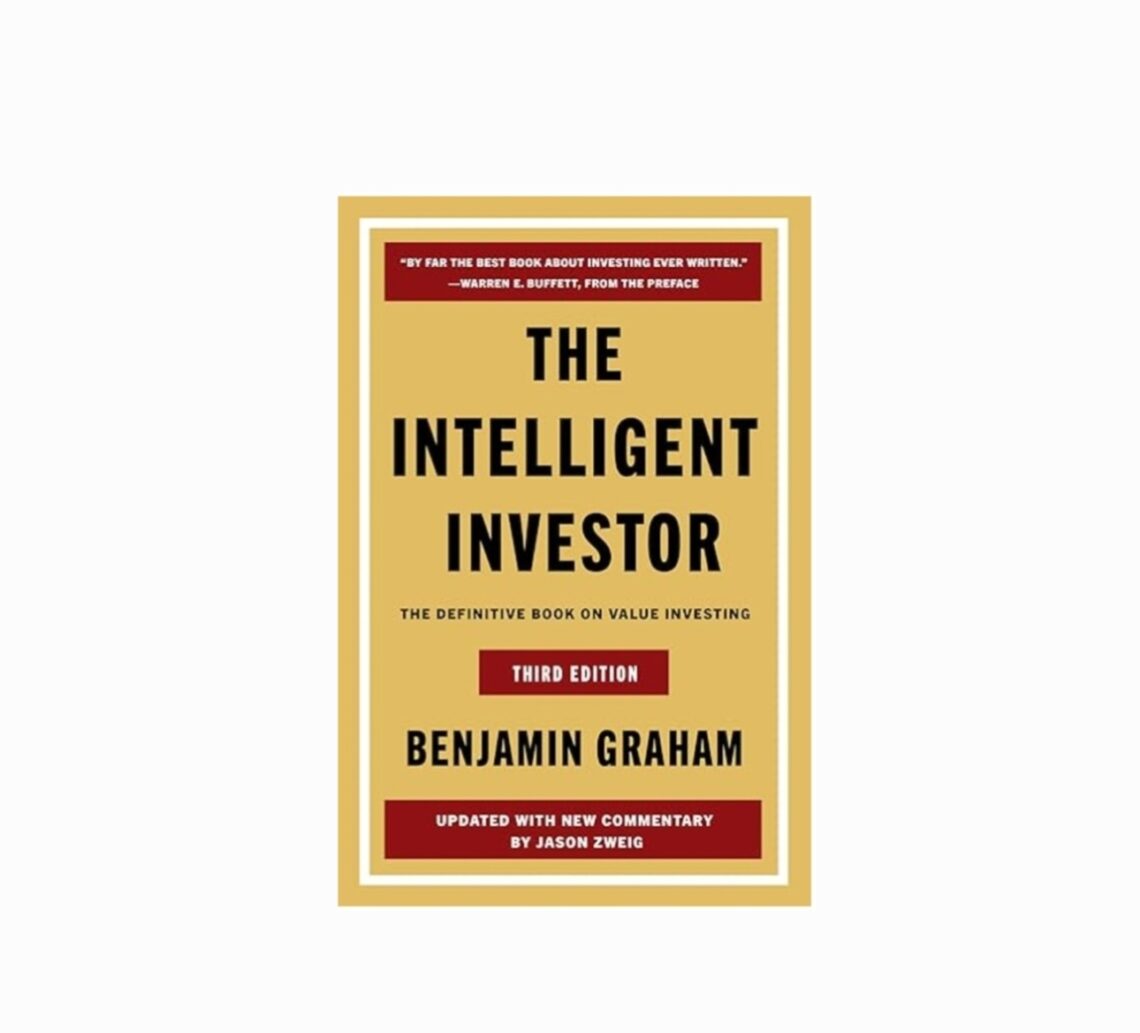
What Benjamin Graham Really Teaches Us About Freedom
What if the biggest risk in investing isn’t the market—but the way we react to it?
This question sits quietly beneath the surface of The Intelligent Investor, even though the book is often framed as a technical guide to value investing. Benjamin Graham was not primarily concerned with beating the market. He was concerned with something more fragile and more human: the investor’s ability to survive their own behaviour.
That distinction matters more today than it did when the book was first written.
The Market Is Not the Enemy—Impatience Is
Graham’s most enduring idea is not a formula or a valuation metric. It is a mental posture.
He invites us to see the market not as an authority, but as a participant—emotional, inconsistent, and often wrong. Prices move not because value has changed, but because sentiment has. This is not a flaw in the system; it is the system.
For modern investors, especially those pursuing FIRE, this reframing is crucial. If your goal is long-term independence rather than short-term validation, reacting to every fluctuation becomes not just unnecessary, but dangerous.
The market’s volatility does not threaten freedom. Our urge to respond to it does.
Margin of Safety as a Life Principle
Graham’s concept of margin of safety is usually explained in financial terms: buy assets at a price low enough that mistakes won’t be fatal. But read more closely, and it becomes clear that this is a broader philosophy of decision-making.
A margin of safety is not about precision. It is about humility.
It acknowledges that forecasts fail, models break, and circumstances change. In investing, this means leaving room for error. In life design, it means avoiding structures that require everything to go right.
FIRE, at its core, is built on the same idea. Financial independence is not about predicting the future correctly. It is about building a life that remains stable even when predictions are wrong.
Defensive Thinking in an Optimised World
Graham distinguishes between defensive and enterprising investors, but the distinction is often misunderstood. Defensive does not mean passive or disengaged. It means recognising limits—of time, attention, and emotional energy.
In a world that constantly encourages optimisation—higher returns, faster exits, better leverage—defensive thinking can feel almost subversive. Yet it is precisely this restraint that allows independence to compound quietly in the background.
For those balancing investing with careers, side hustles, or creative work, this matters. Not every decision needs to maximise upside. Some decisions exist to protect continuity.
If this way of thinking resonates, it aligns closely with a broader FIRE philosophy that prioritises optionality over optimisation—an idea explored more deeply in a separate reflection on financial independence and life design.
Freedom Is Not Found in Certainty
Graham never promises certainty. In fact, he warns against it.
Markets will misprice. Investors will overreact. Systems will wobble. The intelligent response is not control, but preparation. Not prediction, but resilience.
This is where Graham’s work quietly intersects with FIRE and modern life design. Independence does not come from knowing exactly what will happen. It comes from structuring finances—and lives—so that no single outcome has the power to derail everything.
A Subtle Shift in Perspective
Reading Graham today does not make you more confident. It makes you more patient.
It shifts the question from “How do I win?” to “How do I avoid losing in irreversible ways?” That shift is subtle, but profound. It moves the focus from performance to endurance, from excitement to sustainability.
In a culture obsessed with speed, Graham offers something rarer: a framework for staying intact.
And perhaps that is the most valuable form of intelligence an investor—or a human—can cultivate.

