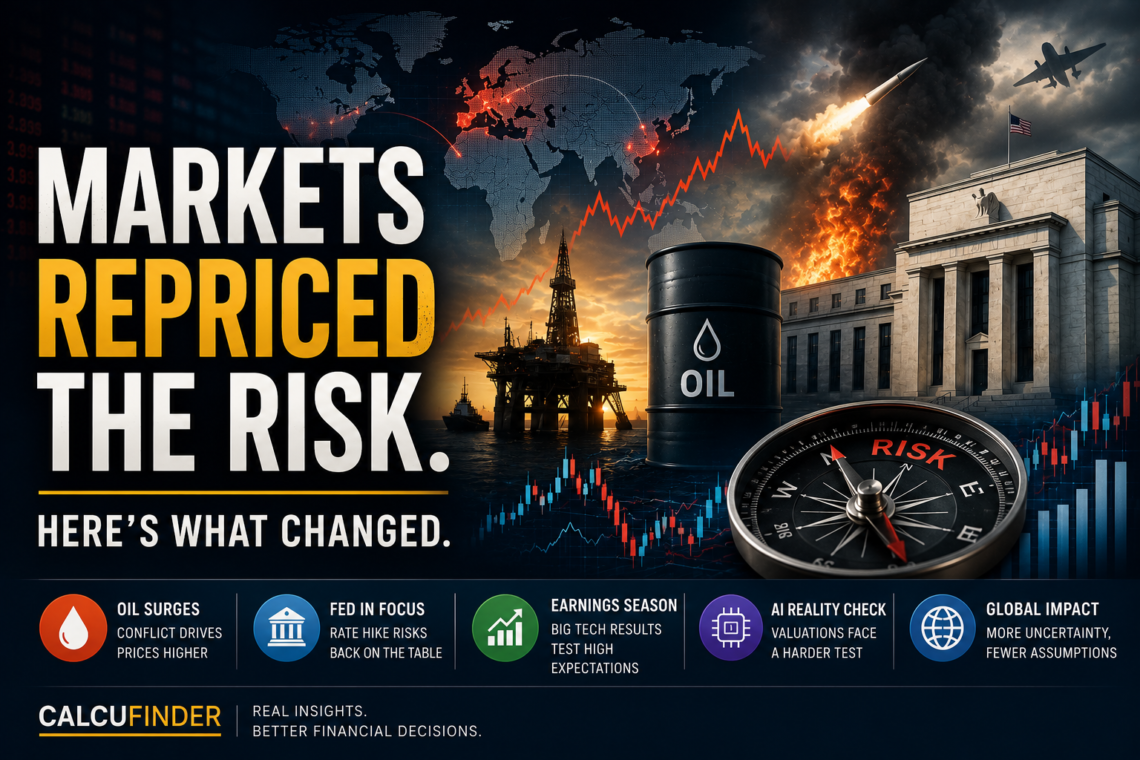
The past week reminded investors that markets rarely move on one theme alone.
Oil surged as conflict in the Middle East intensified. Inflation concerns returnd. Interest-rate expectations shifted again. At the same time, earnings season began, testing whether corporate results can justify elevated market valuations-particularly across AI-related companies.
✔️ Oil Has Surged, and Inflation Risks Have Returned
What’s Happening
Brent crude climbed above US$90 per barrel after military confilct between the US and Iran intensified for a ninth consecutive day. Shipping through the Strait of Hormuz slowed sharply, renewing fears over one of the world’s most important energy corridors.
Why This Matters
Higher oil prices quickly feed into transport costs, manufacturing, consumer prices and inflation expectations. Energy markets have once again become a major driver of macroeconomic conditions.
What Elevates It
The concern extends beyond oil itself. Prolonged disruption in the Gulf could reshape inflation expectations, interest-rate policy and global supply chains simultaneously.
✔️ Fed Rate Expectations Are Moving Higher Again
What’s Happening
Although recent US inflation data was softer than expected, futures markets increased pricing for additional Federal Reserve tightening after oil prices surged. Treasury yields moved higher as investors reassessed the inflation outlook.
Why This Matters
Markets had started to believe inflation was steadily easing. Rising energy prices complicate that assumption and may delay future policy easing.
What Elevates It
The market is no longer reacting only to economic data. Geopolitical events are again influencing expectations for monetary policy.
✔️ Big Tech Earnings Are About to Test the AI Narrative
What’s Happening
A busy earnings week begins with Alphabet, Tesla, Intel and several major technology companies reporting results. Investors are looking beyond earnings growth to assess whether AI-related investment continues to generate attractive returns.
Why This Matters
Technology companies have driven much of the market’s recent performance. Earnings guidance will help determine whether current valuations remain justified.
What Elevates It
Markets are increasingly rewarding profitable AI investment rather than AI spending alone. Expectations have become more demanding.
✔️ Semiconductor Stocks Are Losing Momentum
What’s Happening
The Philadelphia Semiconductor Index has fallen around 20% from its June peak as investors reassess valuations. Competition has also intensified following the release of China’s new Moonshot AI model.
Why This Matters
Semiconductors remain central to AI infrastructure, but leadership within the sector is becoming more selective.
What Elevates It
The AI story is shifting from rapid expansion towards proving long-term profitability and competitive advantage.
✔️ The ECB Faces a More Difficult Decision
What’s Happening
The European Central Bank is widely expected to leave interest rates unchanged this week. However, rising oil prices have increased uncertainty around the inflation outlook just as price pressures had begun to moderate.
Why This Matters
Europe now faces the same challenge confronting other major economies: balancing slowing inflation against renewed geopolitical risks
What Elevates It
Energy prices are once again influencing central-bank decisions, reducing confidence that the path towards lower inflation will remain smooth.
✔️ What This Means for Financial Planning
This week’s developments highlight how quickly market assumptions can change.
Only a week ago, attention centred on cooling inflation and stable interest-rate expectations. Today, conflict has pushed oil above US$90, inflation concerns have returned, and investors are reassessing both monetary policy and technology valuations.
The lesson is not to predict the next geopolitical event.
It is to recognise that financial plans rarely depend on a single variable. Energy prices, inflation, interest rates, investment returns and market sentiment often change together.
Plans built on one optimistic assumption become increasingly fragile when several conditions shift at the same time.
A stronger financial structure leaves room for uncertainty rather than assuming it disappears.
✔️ Related Calcufinder Tool
Scenario Return Calculator – Compare how different inflation, return and contribution assumptions can change long-term investment outcomes.
✔️ Further Reading
How Income Volatility Changes Your Investment Outcome – Volatility is not limited to markets. Changes in inflation, interest rates and employment often affect cash flow before they affect long-term returns. Sustainable investing begins with resilient cash flow.
✔️ Representative Sources
https://www.reuters.com/world/china/global-markets-global-markets-2026-07-20/
https://www.reuters.com/world/asia-pacific/dollar-firmer-us-iran-conflict-intensifies-brent-hits-90-2026-07-19/
https://au.marketscreener.com/news/gold-slips-as-oil-prices-advance-fed-rate-hike-voices-grow-ce7f51dade8ff121?
https://www.ig.com/en/news-and-trade-ideas/weekly-market-navigator-20-jul-2026-260720?
Disclaimer: This article is for general information only and is not financial advice. You are responsible for your own financial decisions.

